Most financial emergencies are small: a tyre, a clinic visit, a phone, a taxi fare. When there is no cushion, they become loans.
A small emergency fund breaks that cycle. It does not need to be big to help.
How much emergency fund do you need?
| Stage | Target | What it covers |
|---|---|---|
| Starter | R500 to R1,000 | Small, sudden costs |
| Month one | One month of essential costs | A short income gap |
| Strong | Three months of essential costs | Job loss or a bigger shock |
Essential costs are rent, food, transport, electricity, water and minimum debt payments. If yours add up to R7,000 a month, one month is R7,000 and three months is R21,000.
Work out your own figure first. See how to budget.
How do you start an emergency fund with very little?
- Pick a first target you can reach in a few months.
- Choose a small, fixed amount. R50 a week becomes R2,600 in a year.
- Save on payday, before you spend. Treat it like a bill.
- Put it in a separate account, ideally one without a card.
- Boost it with windfalls, such as a tax refund, a bonus or a side-hustle payment.
Use an account with no easy access, such as a notice account or one at a different bank, so the money is not part of your daily spending.
Where do you find the money?
Look for small leaks: unused subscriptions, extra airtime, takeaways and impulse purchases. A review of your debit orders often finds a few hundred rand. See debit orders.
See SARS tax refund and side hustles for ways to boost it.
What counts as an emergency?
- A medical cost.
- A repair that stops you getting to work.
- A sudden loss of income.
- An unavoidable funeral cost.
What does not count: sales, holidays, treats and planned costs. Plan those separately. See sinking funds.
What should you do after you use it?
Rebuild it. Even R50 a week restores your cushion over time. Think of the fund as insurance you pay into, not a one-off.
How does an emergency fund save you money?
Without it, you may borrow. At the legal maximums, a first one-month R2,000 loan can cost about R474, which is almost a quarter of what you borrowed. See R2000 loan.
A fund of R2,000 costs nothing to use. You only need to refill it.
What if you have debt as well?
Do both, in a balanced way. A small starter fund, then extra payments on expensive debt, then build the fund further. See what to do when you cannot pay your debts.
If you want your fund to earn something, a tax-free savings account can be a home for money you will not need soon. The SARS tax-free investment rules show the limits.
How long does it take to build an emergency fund?
The time depends on how much you save each week and how big the target is. Here is the arithmetic for three targets: R1,000, one month of essentials at R7,000 and three months at R21,000.
| Saved each week | R1,000 | R7,000 | R21,000 |
|---|---|---|---|
| R50 | 20 weeks | about 2.7 years | about 8 years |
| R100 | 10 weeks | about 1.3 years | about 4 years |
| R200 | 5 weeks | about 8 months | about 2 years |
These figures assume no windfalls and no withdrawals. They show why the starter target matters. R1,000 is reachable in months, even on R50 a week, while three months of essentials is a long journey.
Celebrate the first goal, then raise your weekly amount when your income rises or a debt is cleared.
Where should you keep an emergency fund?
You want the money safe, separate and easy to reach when you need it. Compare the usual choices:
| Option | Access | Notes |
|---|---|---|
| A separate savings account | Quick | Easy, with low or modest interest |
| A notice account | A few days’ notice | Harder to dip into by accident |
| A money market fund | A day or two | Can earn more, but is not a bank deposit, so check the risk |
| Cash at home | Immediate | Can be lost or spent, and earns nothing |
For most people, a separate savings account at a bank is a good start. Avoid products that lock your money for months, or that carry investment risk, because an emergency fund must be there when you need it.
A tax-free account is better for money you will not need soon.
What is the three-question test before you touch it?
A fund only works if you use it for what it is for. Before a withdrawal, ask:
- Is it urgent? Will something bad happen this week if I do not pay?
- Is it necessary? Would I really pay it if it were a bill?
- Is it unavoidable? Is there no cheaper way, such as a payment plan?
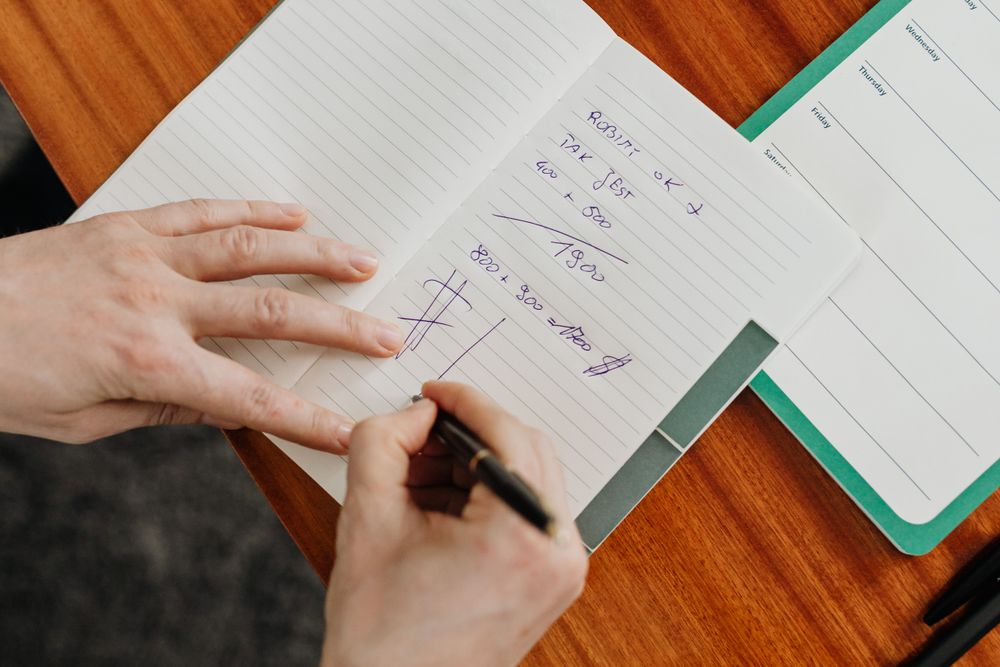
If the answer to all three is yes, use the fund without guilt. Then write the amount in your notes and set a plan to refill it. If any answer is no, the spending belongs in your budget or a sinking fund.
How do you build a fund on an irregular income?
If your pay moves from month to month, saving a fixed amount is harder. Try a percentage rule:
- Save 10% of every payment you receive, on the day it arrives.
- In a good month, add a little more.
- In a lean month, keep the 10% anyway, even if it is only R100.
Base your target on your lowest months. If your essentials are R6,000 and your worst months still cover R5,000, your gap is R1,000 a month, so that is what your fund has to bridge. See how to budget for building a plan around uneven pay.
What does it cost to go without one?
Here is a hypothetical year with three surprises of R1,500 and no fund. If each is covered with a short-term loan at the legal maximums, the first costs about R391, and the later two about R361 each, a total of about R1,113.
With a fund of R1,500, refilled at R125 a month, the same three surprises cost nothing in fees. After a year, the household that saved is ahead by about R1,100, and it has a cushion left.
That is the difference between paying to borrow and paying yourself.
Frequently asked questions
Is R500 enough?
It covers many small shocks, but it is a starting point. Build towards one month of essentials.
Should I save or pay debt first?
Build a small emergency fund first, then pay costly debt faster.
How long does it take?
At R50 a week, R1,000 takes 20 weeks. Windfalls shorten it.
Can I keep my emergency fund in a tax-free account?
You can, but withdrawals use up allowance. Many people keep it in a plain savings account.
How much should I put in my emergency fund first?
Start with R500 to R1,000. It covers many small shocks, and it is a goal you can reach in a few months.
Should I use my emergency fund to pay debt?
Keep a small fund, and use extra money on costly debt. Using the whole fund to pay a loan leaves you exposed to the next surprise.
One free 5-minute form is sent to NCR-registered lenders. Each lender decides for itself and shows you the full cost before you sign.
Start my free application