If you only read one document before taking a loan, make it this one. The pre-agreement quote tells you what the loan will really cost, in rand, in plain numbers.
Here is what a pre-agreement quote must contain, how to read it and how to compare two.
What is a pre-agreement quote?
Under the National Credit Act, a credit provider must give you a pre-agreement statement and quotation before you sign. It sets out the main terms so you can compare offers and decide.
It is the offer. The credit agreement is the binding contract, and the two should match.
What are the 7 lines to check on a pre-agreement quote?
| Line | What to look for |
|---|---|
| Amount of credit | The principal you are borrowing |
| Amount you receive | After any fees deducted |
| Interest | The rate and how it is calculated |
| Fees | Initiation fee, service fee and others |
| Insurance | Any premium. See credit life insurance |
| Total cost | The total you will pay back, in rand |
| Repayment schedule | Number, size and dates of instalments |
How do you read a pre-agreement quote quickly?
- Find the total repayment. It is the single most important number.
- Subtract the amount borrowed. The difference is the cost of the loan.
- Check the instalment against your budget. See loan affordability.
- Look at the dates. Do the debits fall after your salary?
- Read the fees. Are there charges you did not expect?
How do you compare two quotes?
Here is a hypothetical example for a R2,000 loan.
| Compare | Quote A | Quote B |
|---|---|---|
| Amount received | R2,000 | R2,000 |
| Total repayment | R2,640 | R2,520 |
| Instalments | 3 | 2 |
| Monthly instalment | R880 | R1,260 |
| Fees included | R340 | R280 |
Quote B costs R120 less overall, but its monthly instalment is higher. The right choice is the cheaper one that still fits your budget. A longer term lowers the instalment but can raise the total.

What should match between the quote and the agreement?
The amounts, fees and dates should be the same. If they differ, ask for an explanation before you sign. Read how to read a credit agreement for the clauses to check.
What if you do not get a pre-agreement quote?
A lender that will not provide one before you sign is a red flag. Do not sign anything until you receive it.
Ask in writing. If the lender still refuses, consider another lender. You can report concerns to the National Credit Regulator.
How long is the quote valid?
A quote is usually valid for a limited period, and it should say how long. If you wait beyond that, the terms may change. Ask the lender if you are unsure.
What if you already signed without one?
Contact the lender, ask for the quote and agreement, and check the numbers. If something is wrong, see your rights under the National Credit Act and the Credit Ombud.
What does a full pre-agreement quote look like in rand?
Here is a hypothetical quote for a R3,000 loan over three months at the legal maximums for a first short-term loan, repaid in equal capital instalments. The lines follow the order a quote usually uses.
| Line | Amount |
|---|---|
| Amount of credit | R3,000.00 |
| Interest over the term (5% a month on the balance) | R300.00 |
| Initiation fee (R165 plus 10% of R2,000) | R365.00 |
| Service fees (R60 for 3 months) | R180.00 |
| VAT on the fees (15%) | R81.75 |
| Total cost of credit | R926.75 |
| Total repayment | R3,926.75 |
| Instalments | 3, of about R1,309 each |
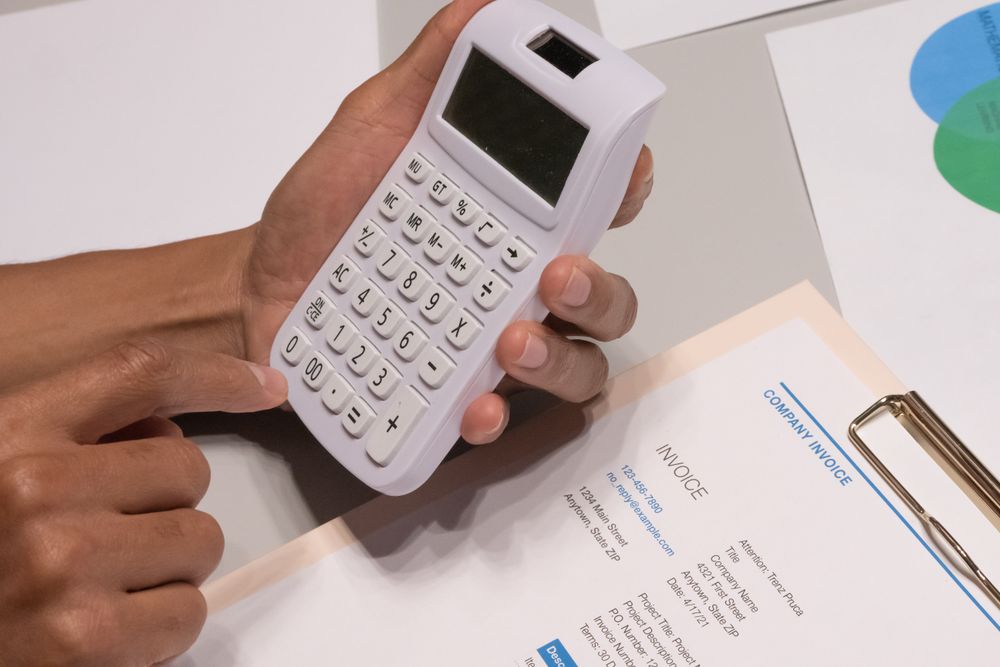
Check the sum yourself: R300 plus R365 plus R180 plus R81.75 is R926.75, and R3,000 plus R926.75 is R3,926.75. If a quote’s lines do not add up to its own total, ask the lender to explain before you accept.
A pre-agreement quote that cannot survive a calculator is not ready to sign.
What can differ between the quote and the agreement?
The quote and the agreement should say the same things. Compare them side by side, line by line.
| Check | If it is different |
|---|---|
| Amount you receive | Ask whether a fee has been deducted that the quote did not show |
| Total repayment | Do not sign until it matches |
| Instalment dates | Ask for the quote’s dates, or a written change you agree to |
| Insurance | If a premium appears that was not on the quote, ask for it to be removed |
| Late-payment charge | It should be stated and reasonable |
A difference is not always a mistake, but it is always a question. Ask in writing, and wait for the answer before you sign. Our guide to credit agreements lists the other clauses to read.
How should you use the time before you accept?
Nothing binds you until you sign, and a good lender gives you time. Use 24 hours well:
- Test the instalment against your lowest month with the loan affordability guide.
- Get one more quote, so you have something to compare.
- Ask the lender the three questions that the quote does not answer: what happens if a debit fails, how early settlement works and whether the loan is reported to a credit bureau.
- Sleep on it.
If a lender says the offer expires in minutes, treat that as pressure, not a deadline. A genuine offer survives a night’s sleep.
What red flags can appear on a quote?
| What you see | Why it matters |
|---|---|
| Blank or “to be confirmed” lines | The cost is not fixed yet |
| No total repayment | You cannot compare or budget |
| A fee with no name | You cannot tell what it pays for |
| A lender name that differs from the advert | You may be dealing with someone else |
| Pressure to sign by message | A real lender gives you the document first |
If you see any of these, ask for a corrected quote or walk away. You can report a lender that refuses to provide a pre-agreement quote to the National Credit Regulator.
What should you do after you accept the pre-agreement quote?
Acceptance is not the end of the paperwork. Save the quote and the signed agreement in one place and compare the numbers line by line. Put every due date in your calendar.
Check your first statement against the quote, so that any difference shows up in month one, not month six.
If you find a charge that was not on the pre-agreement quote, ask the lender to explain it in writing straight away. Early questions are easier to answer than late ones, and a clear paper trail is your best protection.
Frequently asked questions
Is the quote the same as the contract?
No. The quote is the offer. The contract is what you sign. They should match.
Can the lender change the numbers after I accept?
Only as the agreement and the law allow. Ask for any change in writing.
Does a quote mean I am approved?
It usually follows an assessment, but read it carefully. Approval is the lender’s decision.
Who can I complain to?
The lender first, then the Credit Ombud and the NCR.
Can I get a pre-agreement quote without committing?
Yes. The quote is an offer, and you can decline it without penalty before you sign the agreement.
Should I save a copy of the pre-agreement quote?
Yes. Keep it with your agreement and payment proofs. If the lender later charges something different, the quote is your evidence.
One free 5-minute form is sent to NCR-registered lenders. Each lender decides for itself and shows you the full cost before you sign.
Start my free application