Emergency Loans in South Africa: What You Actually Need to Know

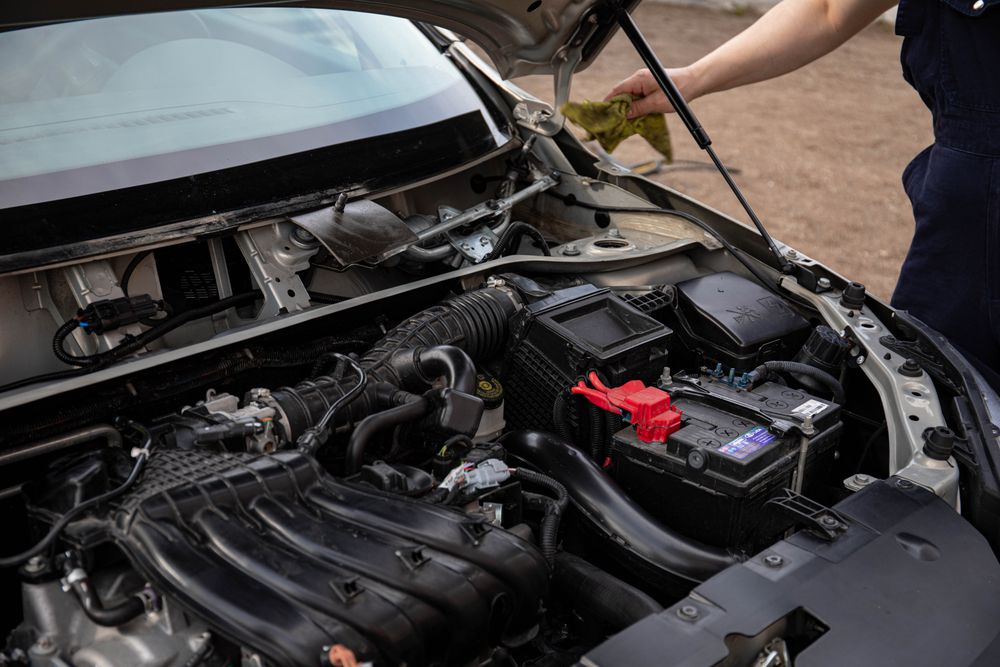
Emergencies do not check your bank balance first. The car dies on the way to work, the geyser goes on a Sunday, a family member phones with news that costs money you had not planned to spend. And it always seems to land in the week the account is at its thinnest.
Emergency loans exist for exactly those moments. Used well, emergency loans are a short bridge over a real gap. Used badly, they turn one hard month into six. This guide walks through how they actually work in South Africa, what they cost in rand, who qualifies, and, honestly, when you should not take one at all. We are a comparison site, so we have no reason to talk you into anything.
What an emergency loan actually is
An emergency loan is not a special product with its own rulebook. It is a plain short-term loan, applied for quickly because the need is urgent. The label describes the reason you are borrowing, not a different kind of credit.
In practice, emergency loans in South Africa sit in the short-term credit bracket of the National Credit Act: amounts from R500 to R8,000, repaid in one instalment on your next payday or spread over a few months. Whether you call it a payday loan, an urgent cash loan or a same-day loan, the underlying agreement is the same.
One thing worth saying early: no honest lender offers emergency loans with “guaranteed approval” or “no credit check”. Both phrases are red flags in South Africa, and we explain why further down.
How emergency loans work, step by step

The process is short by design. You complete an application, the lender checks that you can afford the repayment, and if approved, the money is paid into your account. Most of it happens on your phone.
Here is the honest timeline. Filling in the form takes about five minutes. The lender’s affordability and credit check usually runs around twenty minutes during business hours. Once you sign the agreement, the payout is released by EFT, and your bank does the rest.
How fast the money reflects depends on your bank and the amount. Small amounts on a bank that supports PayShap can land in seconds. Larger payouts ride standard instant EFT and can take up to an hour. Apply after hours or over a weekend, and the application simply waits for the next business morning, because banks, not lenders, move the money.
Who qualifies, and what you need
The base requirements are the same across almost every lender. You must be 18 or older, a South African citizen or permanent resident, hold a valid ID, and have a bank account in your own name that receives regular income.
Income is the part that really decides it. Lenders are legally required to check that you can afford the repayment, so they look at what lands in your account each month against what already leaves it. A modest salary with room to spare beats a big salary drowning in debit orders.
You do not always need a payslip. If you are self-employed, freelance or paid on commission, three months of bank statements work as proof of income. Our guide on a same day loan without a payslip covers that route in detail.
For the application itself, keep four things ready: your green ID book or smart ID card, three months of bank statements or a recent payslip, proof of your income, and the bank account details for the payout. Have those on hand and the whole thing moves in one sitting.
Applying for an emergency loan

Because the money is needed fast, comparison sites and lenders have stripped the process down. With Instant Fund, you complete one free form and we send that single application to a panel of registered lenders, instead of you applying to each one separately and denting your credit record with repeat enquiries.
Interested lenders run their own checks and the one that approves you sends a pre-agreement quote. Read it. The quote shows the total you will repay in rand, the instalment amount and the debit dates. If those numbers fit your month, you sign. If they do not, you walk away, no cost, no obligation.
Apply on a weekday morning if you can. Emergency loans move fastest when the lender’s team and the banking rails are both awake, and a debit set for the day after payday is far safer than one that gambles against a slow salary run.
What emergency loans really cost

This is where people get caught, so let us use real numbers. Short-term credit in South Africa is capped by law, but capped is not cheap. Three lines make up the cost: interest of up to 5% per month, a once-off initiation fee, and a monthly service fee.
Take a R3,000 emergency loan repaid in one instalment 30 days later. Interest at 5% adds R150. The initiation fee might be around R165, and the service fee about R60. So you borrow R3,000 and repay roughly R3,375. Your matched lender’s quote shows your exact figures before you sign.
A rough guide to a typical 30-day emergency loan:
| Item | Amount |
|---|---|
| Loan amount | R3,000 |
| Interest (5% for 30 days) | R150 |
| Initiation fee (once-off) | R165 |
| Service fee (monthly) | R60 |
| Total repayable | about R3,375 |
Notice how the once-off fees weigh more on small loans. Borrowing R800 twice costs more in fees than borrowing R1,600 once. If you know a second gap is coming, one properly sized application beats two rushed ones.
The upside, and the catch
The upside is real. Emergency loans are fast, and they are available to people the banks decline, and the pricing is capped and disclosed in writing. For a genuine one-off emergency that your next salary can absorb, they do the job a savings account would have done if you had one.
The catch is just as real. Emergency loans are expensive per rand compared with a bank overdraft, and the speed removes the pause that used to make people reconsider. The single biggest danger is the rollover: borrowing again next month to cover this month’s repayment. That is how a bridge becomes a hole.
So the tool is neither good nor bad. Emergency loans are only as safe as the reason behind them: a one-off gap, or a recurring shortfall. If last month had the same hole, the problem is the budget, not the bridge.
How the NCA and NCR protect you
South Africa regulates this market more tightly than most people realise. Every legitimate lender must be registered with the National Credit Regulator and operate under the National Credit Act 34 of 2005. That gives you real protections, free of charge.
The Act caps what emergency loans may cost, requires an affordability assessment before any approval, and forces the lender to hand you a pre-agreement quote in rand before you sign. It also bans reckless lending, credit granted without checking you can repay it, and gives you a five-business-day cooling-off right to cancel a short-term agreement after signing.
The register is public. Searching a lender’s name or NCRCP number on the NCR site takes a minute, and it is the cheapest insurance in South African credit. If a company cannot show its registration, it is not a lender.
Borrowing responsibly, in plain terms
An affordability assessment is the lender’s job. Sizing the loan to your real life is yours. Before you accept any emergency loan, do the arithmetic: salary, minus rent, transport, food, school costs and existing debit orders. What is left is your true ceiling, not the R8,000 the slider offers.
Borrow the gap, not the maximum. Set the debit for the day after payday. And if the repayment would swallow more than a comfortable slice of your next salary, take a smaller amount or a longer term instead. A repayment you can absorb without drama is the whole point.
Cheaper alternatives worth trying first
Before any emergency loan, run through the free options. An advance from your employer usually costs nothing. Savings cost only the discipline of rebuilding them. A stokvel that pays out, a family loan, or December overtime still sitting unclaimed can all close a gap without interest.
Avoid the informal route. A mashonisa is fast, but the monthly cost is brutal and holding your ID or SASSA card as security is illegal. If none of the free options fit, a registered quick loan or mini loan is the regulated route, capped, in writing, and safer.
Common mistakes people make
The first is borrowing the maximum instead of the gap, which drags interest along for no reason. The second is skipping the quote, when the total repayable is the only number that matters and it is printed right there. The third is chasing offers on WhatsApp, where loan scams live and “release fees” are the whole con.
The quiet one is borrowing monthly. If emergency loans are covering the same shortfall every month, another loan makes it worse. That is the moment to look at the budget, or to speak to a registered debt counsellor, not to sign again.
Emergency loans versus other short-term credit
People often use “emergency loans” as a catch-all, but the repayment shape underneath differs, and that shape decides the total cost. A payday loan repays in one instalment on your salary date, which is cheapest in total but heaviest on a single paycheck. A quick loan spreads the same amount over a few months, which lightens each instalment but adds interest and another service fee for every month it runs.
Set against a bank overdraft or credit card, emergency loans are usually pricier per rand, if you already have those facilities and room on them. The catch is access. Banks approve overdrafts slowly and against strong records, and often decline exactly the people who need short-term help today. That gap is the space emergency loans fill.
So the honest rule is simple. If you have a cheaper facility with space on it, use that first. If you do not, emergency loans from a registered lender are the regulated alternative, priced higher but capped, disclosed and closed-ended. What you should never do is fill the gap with an unregistered street lender, where none of these protections exist.
What to check before you accept an emergency loan
Once a lender approves you, five quick checks separate a good decision from a regret. First, confirm the lender is registered on the NCR site. Second, read the total repayable in the quote, not just the instalment. Third, check the debit date lands after your payday, never before it.
Fourth, make sure no fee is being asked before payout, because legitimate emergency loans never charge you to release your own money. Fifth, be honest with yourself about the repayment: if it will not fit your next month comfortably, a smaller amount is the wiser call. Those five checks take about two minutes, and they are the difference between emergency loans that help and emergency loans that hurt.
People also ask
Are emergency loans the same as payday loans? Roughly, yes. A payday loan is one type of emergency loan, repaid in a single instalment on your next salary date. Others spread over a few months.
Can I get an emergency loan the same day? Often, if you apply during business hours with your documents ready and bank with a lender that supports fast clearing. Small amounts can reflect within the hour after approval.
Do emergency loans affect my credit score? Yes. Every registered agreement is reported to the bureaus. Repay on time and it builds your record; miss a debit and it works against you.
Is it better to save or take an emergency loan? Savings win every time when you have them, because they cost no interest. An emergency loan is for the emergency that arrives before the savings do.
Frequently asked questions
What is the fastest way to get an emergency loan in South Africa?
Apply online to a registered lender during business hours, with your ID, bank details and proof of income ready. Small amounts on a PayShap-enabled bank can reflect within the hour once the lender approves and you sign.
Can I get an emergency loan with bad credit?
Often, yes. Many lenders weigh your current income and affordability more heavily than old listings. Approval is never guaranteed, and anyone promising it is breaking the law.
How much can I borrow with an emergency loan?
Short-term emergency loans in South Africa usually run from R500 to R8,000. The lender decides the amount based on what your affordability assessment shows you can repay.
Do emergency loans require a payslip?
Not always. If you are self-employed or paid irregularly, most lenders accept three months of bank statements as proof of income instead of a payslip.
How much do emergency loans cost?
Short-term credit is capped by the National Credit Act: interest up to 5% per month, a once-off initiation fee and a monthly service fee. Your exact cost appears in the pre-agreement quote before you sign.
Are online emergency loans safe?
They are safe when the lender is registered with the National Credit Regulator, the site uses https, and no fee is charged before payout. A real lender never asks for money to release your loan.
Can I settle an emergency loan early?
Yes. The National Credit Act lets you settle any short-term agreement early, penalty-free, with interest calculated only up to the settlement date. Ask the lender for a settlement letter.
What happens if I cannot repay my emergency loan?
Contact the lender before the debit date to reschedule. A bounced debit adds penalty and bank fees and marks your credit record. If several debts are unmanageable, speak to a registered debt counsellor rather than borrowing more.
One free form compares NCR-registered lenders, with the costs and terms in writing before you decide.
Start My Free Application
Final thoughts
Emergency loans are a tool, and like any tool they reward being used for the right job. For a genuine one-off gap that your next salary can carry, emergency loans borrowed from a registered lender and repaid on time do exactly what they are meant to.
The trouble starts when the emergency is really a budget problem in disguise. So before you sign, ask one honest question: is this a one-time gap, or the same hole as last month? If it is a gap, size it small, read the quote, and cross the bridge once. If it is a pattern, the answer lives in the budget, and no loan will fix it. Either way, you now know enough to decide with your eyes open, which is the whole point of a comparison site that does not lend you a cent.
InstantFund is a free loan-matching and comparison service, not a credit provider, bank or lender, and does not give financial or legal advice. Loans are provided by third-party lenders registered with the National Credit Regulator under the National Credit Act 34 of 2005. Amounts, interest and fees are indicative; your matched lender confirms exact costs in rand in a pre-agreement quote before you sign. Borrow responsibly.